"The first proposal would have not worked because I would have lost my home."
That's William Agnew, who lives about 30 feet from the rail corridor that cuts through the middle of Solana Beach, describing what it felt like to watch a regional transportation agency study whether his street would become the entry point for a tunnel portal, as reported by NBC 7 San Diego. He wasn't exaggerating for effect. For about a year, one of three official alternatives for a multibillion-dollar rail relocation project would have started construction inside the same trench that runs past the Solana Beach Transit Center and the edge of the Cedros Design District, the walkable core that gives this town its identity and its price premium.
If you're comparing Solana Beach to Del Mar or Encinitas right now, you've probably noticed that homes near the tracks here don't behave the way rail-adjacent homes usually do. They don't trade at a discount. Some of the priciest new construction in the city markets its proximity to the tracks as a selling point. Understanding why requires knowing a piece of engineering history most listing sheets skip, and understanding what almost undid it requires knowing a piece of 2024 and 2025 local government history that most buyers never hear about until they're already in escrow.
Why the tracks stopped being a liability decades ago
Solana Beach's stretch of the Los Angeles-San Diego-San Luis Obispo rail corridor doesn't sit at street level. In the late 1990s, an $18 million project lowered the tracks and station platforms into their current trench, adding a track and platform while eliminating the at-grade railroad crossing that used to sit south of the station. The Solana Beach Transit Center itself opened in 1994, designed by architect Rob Wellington Quigley, funded in part through a state passenger rail ballot measure and a county sales tax.
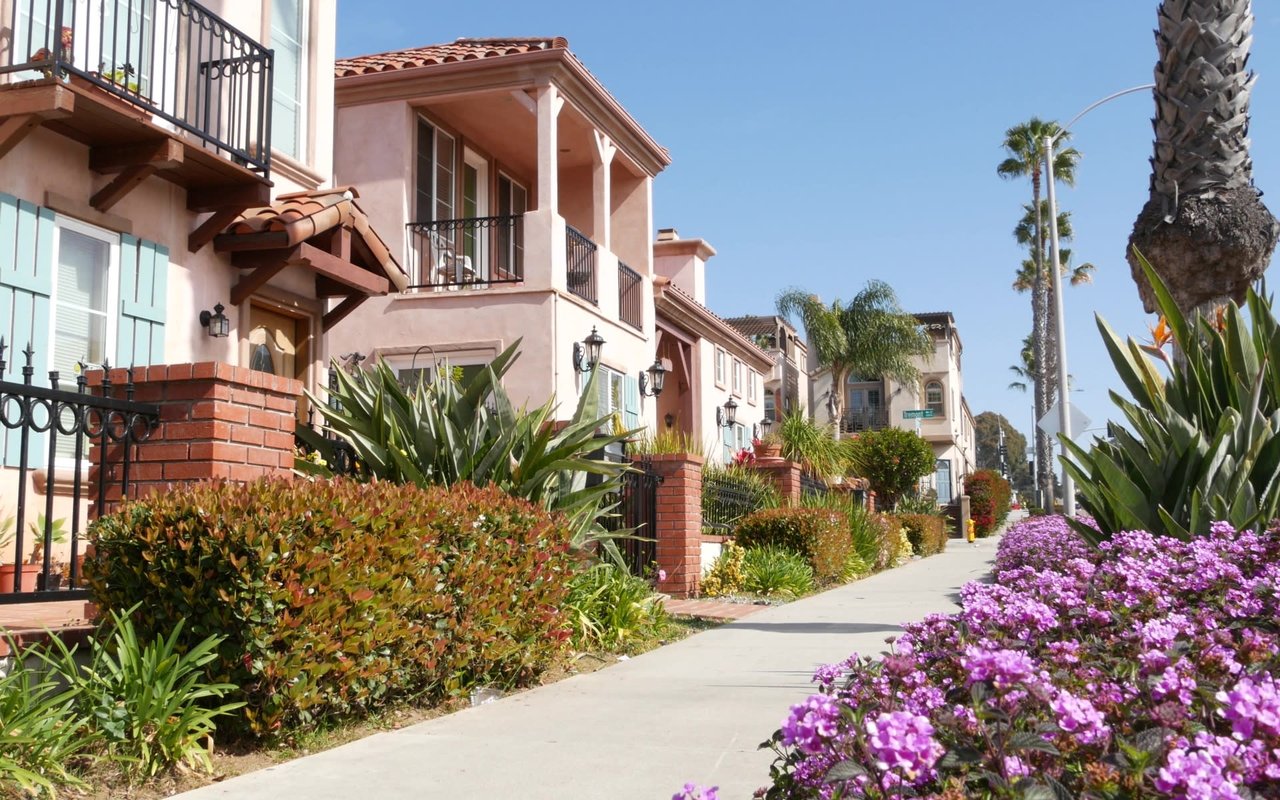
That engineering decision is the reason the rule most buyers assume about rail lines doesn't apply cleanly here. In most coastal towns, proximity to active tracks pulls a home's value down. In Solana Beach, a home a few blocks from the Cedros Design District and the trenched rail line is often the more expensive option, not the cheaper one, because the walk to coffee, galleries, the Sunday farmers market, and the train itself is worth more than the noise costs. Current listings on South Rios Avenue market square footage in the seven figures specifically on the basis of that walk, not despite it.
The trench solved a nuisance problem. It did not remove the corridor from future political risk, and that's the part almost nobody buying here in 2024 understood until it landed on the city council's agenda.
What almost happened in 2024
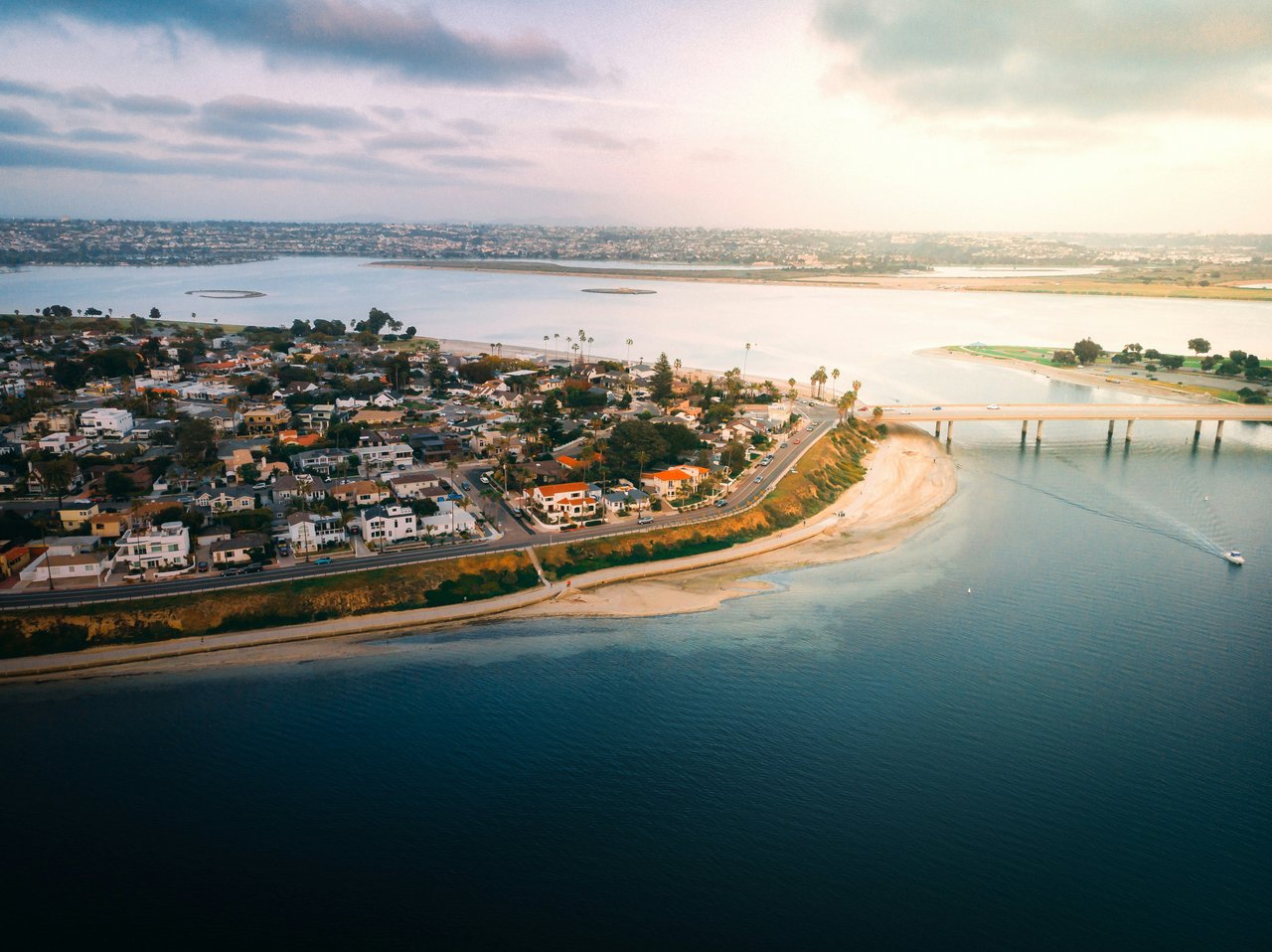
The bluffs in Del Mar, just south of Solana Beach, have been eroding for years, forcing repeated stabilization work and temporary shutdowns of the rail line that runs along them. In response, the San Diego Association of Governments, known as SANDAG, began studying how to move that 1.7-mile stretch of track off the bluffs entirely and into a tunnel further inland. In June 2024, the agency released its first formal environmental notice with three alternatives on the table.
Two of those alternatives ran east under Del Mar and San Diego. The third, called Alternative A, was different. It proposed starting the tunnel inside Solana Beach's existing trench, between Lomas Santa Fe Drive and Via de la Valle, before running south under the Del Mar Fairgrounds and the San Dieguito Lagoon to connect with Interstate 5. At roughly 6.7 to 6.8 miles, it was the longest option studied, the most expensive at around $4 billion, and the one with the longest construction window at seven to twelve years.
Solana Beach's mayor at the time, Lesa Heebner, said at a public meeting, as reported by CBS 8: "Alignment A doesn't pass the common sense test." City leaders argued the alternative had been added late, without the engagement given to Del Mar residents in earlier rounds of study, and that it would put years of tunnel construction directly beneath the town's commercial core and the homes lining the trench.
The four alternatives on the table now
Public comment mattered. SANDAG convened a value analysis process through the fall of 2024 and into early 2025, pulling in technical staff from Del Mar, Solana Beach, San Diego, the Del Mar Fairgrounds, and North County Transit District. That group reviewed more than 200 ideas and developed over a dozen new route concepts before SANDAG's board narrowed the field. In May 2025, the agency released an updated environmental notice describing four alternatives, plus a no-build option, for the draft environmental impact report.
| Version | Starting point | Length | Estimated cost | Status as of 2026 |
|---|---|---|---|---|
| 2024 Alternative A | Existing trench in Solana Beach, Lomas Santa Fe to Via de la Valle | 6.7–6.8 miles | ~$4 billion | Dropped after public comment |
| 2025 updated alternatives (four options) | San Dieguito River Bridge, near Del Mar | 5.3+ miles each | $3.7–5 billion | Under active environmental review |
| No-build option | Current alignment, unchanged | N/A | N/A | Included as CEQA baseline |
Three of the four alignments now under study begin at the San Dieguito River Bridge on the Del Mar side, with the fourth using a nearby variation tied to the planned special events rail platform at the fairgrounds. None starts inside Solana Beach's trench. Geotechnical testing that began in September 2025 has focused on locations in Del Mar and San Diego. The specific scenario that worried Agnew, and that Heebner argued didn't pass the common sense test, is not part of the current environmental review.
That doesn't mean the broader project has gone away. SANDAG's work continues toward a draft environmental impact report, and the no-build alternative remains formally on the table, meaning the agency itself has not ruled out leaving the current alignment exactly where it is.
What this actually changes if you're shopping here
If you're weighing a walkable home near Cedros against a comparable property in Del Mar Village or along Encinitas's coast, the practical takeaway isn't that Solana Beach is risk-free. It's that the specific construction exposure has moved.
For roughly a year, anyone touring a home near South Rios, South Cedros, or South Sierra was shopping in a neighborhood where a portion of a multibillion-dollar tunnel project could plausibly have broken ground on their block. As of the current environmental review, that exposure sits with parcels closer to the San Dieguito River Bridge and the Del Mar side of the corridor instead. If your search has drifted toward Del Mar because the ocean-bluff setting is appealing, it's worth knowing that the properties closest to the new tunnel study area are the ones now carrying the construction question Solana Beach largely shed.
None of this shows up on a standard comparative market analysis. A median price tells you what closed. It doesn't tell you which four route studies are currently active a few blocks from the listing you're touring, or that the alternative most likely to affect a specific parcel changed materially in the past 15 months. In the 92075 zip code, the Greater San Diego Association of Realtors reported a February 2026 median sale price of $2.854 million for detached homes and $1.7 million for attached homes, figures that reflect a market pricing in walkability and scarcity, not a pending tunnel portal, because that specific scenario is no longer part of the plan under review.
Frequently asked questions
Will the train tracks eventually leave Solana Beach entirely? Not under any of the alternatives currently in environmental review. Three of the four action alternatives begin near the San Dieguito River Bridge closer to Del Mar, and the fourth uses a nearby variation, but none moves the corridor out of Solana Beach's existing trench. The trench remains part of every scenario SANDAG is studying as of 2026, including the no-build option.
How would I check the current status for a specific address? SANDAG maintains project documents, including the updated Notice of Preparation and technical study schedules, on its LOSSAN Rail Realignment project page. The City of Solana Beach also posts council updates on the project directly on its website.
Does the trench still carry noise into nearby homes? Some sections trench deeper than others, and sound carries differently depending on grade, distance, and whether a unit faces the corridor directly. This is one of those details that a market report can't answer for you. Visiting a specific property at different times of day remains the only reliable way to judge it.
Solana Beach's walkable core rewards buyers who understand what decades of engineering already solved, and what a live regional planning process could still change. If you're weighing a home near Cedros against options in Del Mar or Encinitas and want someone who tracks these filings as closely as the listings, Ryan Mathys and the team can walk you through both. Schedule a private La Jolla consultation to start the conversation.