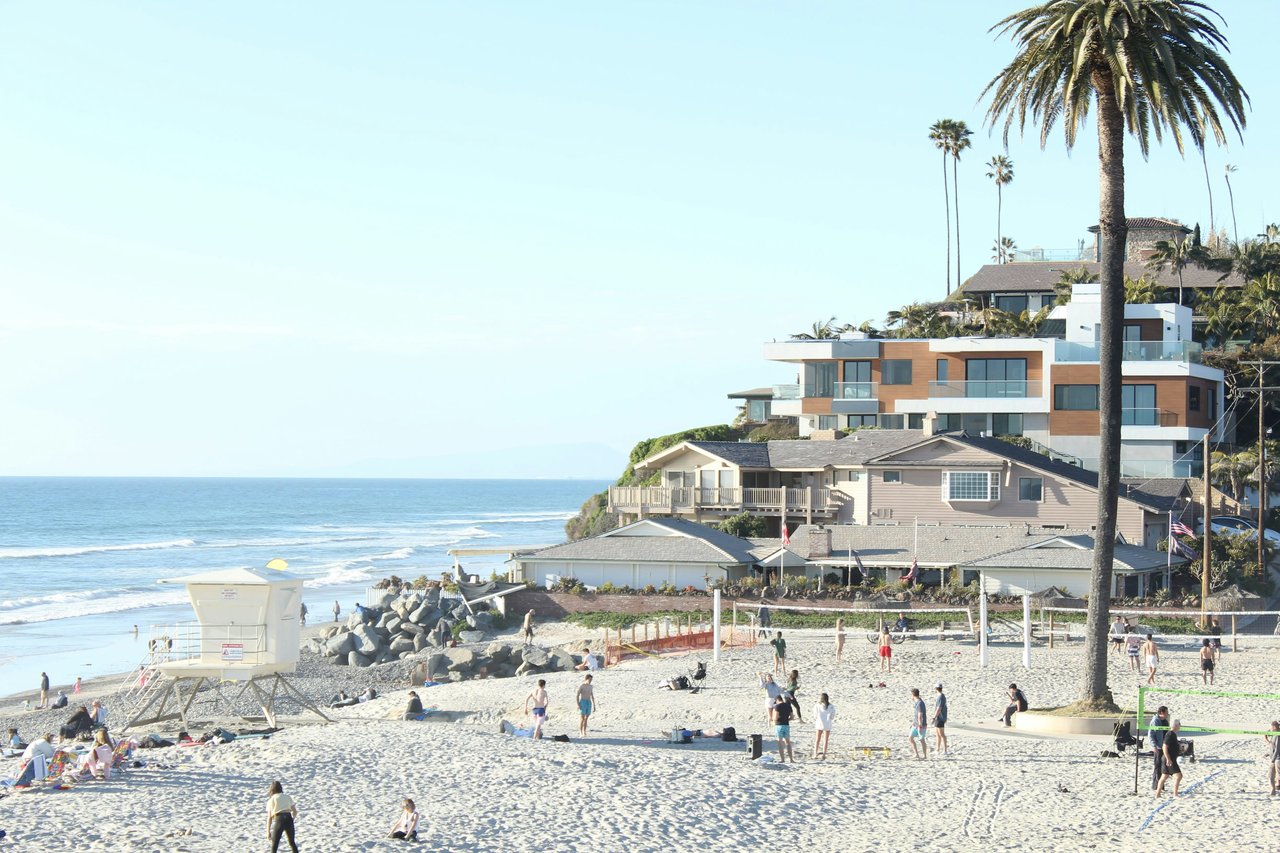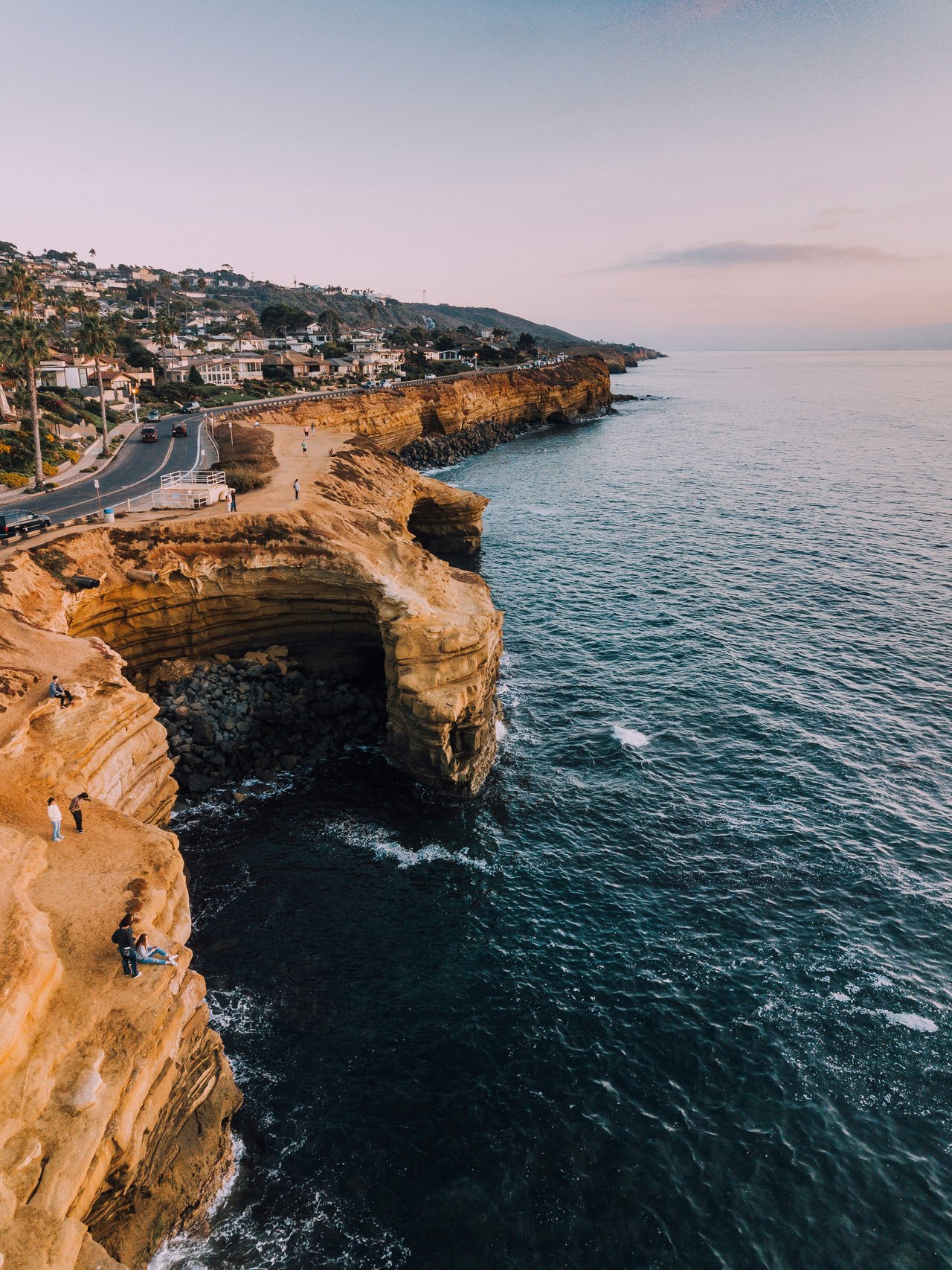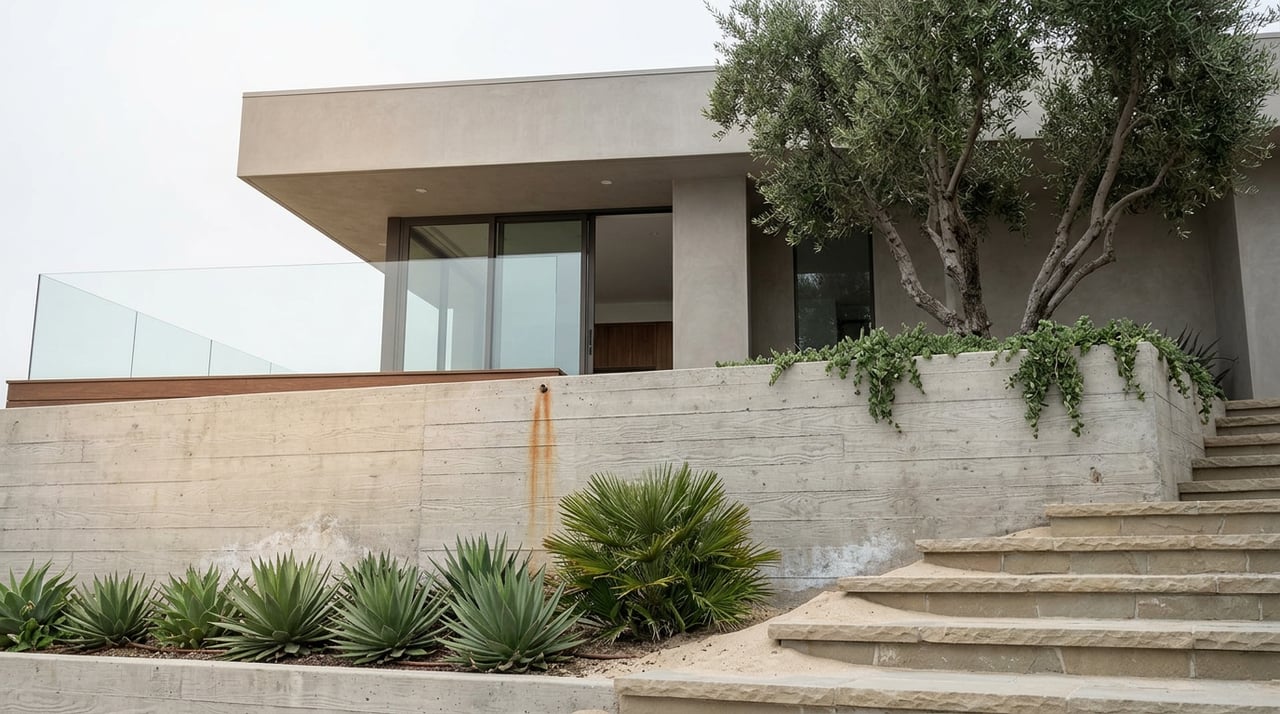
In the early 1990s, the owner of a lot at 245 Pacific Avenue in Solana Beach made a trade with the California Coastal Commission. In exchange for permission to build a new home just 20 feet from the edge of an eroding bluff, the owner agreed to waive any future right to armor that bluff with a seawall. It was meant to close the door permanently. For decades after that, the door held. Neighboring property owners, whose homes predated the California Coastal Act and retained their own armoring rights, applied to fill the 50-foot gap left by the restricted lot five separate times. The Commission said no five times.
Then, in 2021, a seawall went in anyway.
That reversal is the reason a listing that says "seawall in place" or "no shoreline protection permitted" tells a buyer almost nothing about what happens next. In Solana Beach, both conditions are negotiable, and the negotiation has a price tag that keeps changing.
The waiver that almost held
The 245 Pacific Avenue story is a useful stress test for how permanent these restrictions really are. The neighbors' argument was that the gap in an otherwise continuous seawall was destabilizing their own bluffs. In September 2020, the Coastal Commission caught the applicants trying to quietly remove the restricted parcel from its own permit application, an attempt to make the project look like it only benefited the unrestricted neighbors rather than the very lot whose deed forbade armoring. Commissioners voted 7-5 to deny it, and one commissioner called the arrangement a poster child for managed retreat, the state's preferred long-term approach of letting the shoreline move rather than fighting it with concrete.
Surfrider Foundation's local chapter had opposed the project publicly, with representative Kristin Brinner telling commissioners at the hearing:
"This application is a real stinker, and we appreciate your efforts to reach a compromise."
The applicants sued in San Diego Superior Court on October 19, 2020, to overturn the denial. A settlement followed, and in 2021 the Commission approved the seawall on its third try, filling the same 50-foot gap it had refused to fill for three decades.
What finally changed the outcome
The deed restriction did not disappear. What changed was the cost of enforcing it. As part of the settlement, one of the four blufftop homeowners made a $140,000 donation earmarked for beach access improvements. All four shared a $54,631 public access mitigation fee owed to the city, plus a $10,272 sand mitigation fee set aside by the Commission. The permit that finally issued is good for 20 years, after which the homeowners have to reapply and justify keeping it. It also carries a condition that the wall must come down early if any of the four homes is removed or significantly remodeled.
For a buyer looking at a bluff-top lot with a 1990s-era waiver on file, the lesson is not that the restriction is meaningless. It is that the restriction buys time and leverage for the neighbors, the city, and the Commission, not a guaranteed outcome for anyone. Decades of denials turned into an approval the moment litigation and a large settlement entered the picture.
The permit clock nobody puts on the flyer
Even homes with an existing, fully permitted seawall are not done negotiating. A separate stretch of Solana Beach bluff carries a 256-foot shoreline protection device, originally permitted in 2010 for 20 years to protect five single-family homes built before the Coastal Act. As that clock ticked down, the property owners went back to the Commission asking to swap the fixed 20-year term for one tied to the life of the structures instead, arguing the change would ease the burden on current and future owners without adding new coastal impacts.
Surfrider opposed the change, warning that removing the 20-year checkpoint takes away the Commission's only regular opportunity to reassess a wall as erosion and sea level rise accelerate. Commissioners approved the amendment 7-1 anyway, with one commissioner agreeing on the record that the 20-year reevaluation requirement was a real burden on homeowners and subsequent owners who might not even be aware it existed.
Put those two cases side by side and the pattern is consistent. A permit term is not a fixed fact you can read off a document and trust to still be true in five years. It is a starting position in an ongoing negotiation that both homeowners and environmental advocates keep coming back to reopen, in either direction.
A fee that moves with the beach, not with the market
Every seawall in Solana Beach, new or repaired, also comes with a Public Recreation Impact Fee, adopted by the City Council in November 2018 after roughly a decade of study. The fee compensates the public for beach area a wall effectively removes from recreational use, and it is calculated from the wall's footprint, the local erosion rate, and an estimated dollar value for a lost day at the beach, which the city's own study set at 33 percent of an individual's wages.
The city's 2016 fee study ran the math for what it called a typical 2-foot by 50-foot seawall.
| Estimate source | Proposed fee for typical 50-ft wall |
|---|---|
| City of Solana Beach's initial proposal | $21,550 |
| California Coastal Commission's suggested rate | $42,100 |
The Council ultimately adopted a fee close to the Commission's higher number, roughly double what the city had first proposed. That is a fee schedule, not a one-time number frozen in 2018. It scales with erosion data, and the real dollar amounts attached to the 245 Pacific Avenue settlement, more than $200,000 across the public access fee, sand mitigation fee, and donation for four homes, show what that scaling looks like once a wall actually gets built. None of it is paid once and forgotten. It gets shared across whichever blufftop lots the Commission decides benefit from the structure, whether or not every one of those owners was the applicant.
What this means before you write an offer or list your home
For a buyer, seller, or agent working a bluff-top property in Solana Beach, the fixed facts on a listing sheet are the least useful part of the picture. What matters is the paper trail behind them.
- Ask for the full Coastal Development Permit history on the specific parcel, not just the neighborhood, since armoring rights and restrictions are recorded lot by lot.
- Check whether any deed restriction on file waives future shoreline protection, and if so, whether neighboring lots have pending or past applications that could eventually affect that parcel too.
- If a seawall already exists, find its permit expiration date and any condition tying it to substantial remodel, since a renovation you are planning could trigger removal or reevaluation years before the wall's stated term is up.
- Budget for the Public Recreation Impact Fee and Sand Mitigation Fee as recurring exposure tied to erosion monitoring, not a cost that gets locked in at construction.
The entire city sits inside the California Coastal Zone, which means the Commission, not the city alone, has final say on any of this. That single fact explains why so many of these cases take years and end up in front of commissioners rather than a city planning desk.
A few questions worth asking directly
Does a deed restriction against seawalls mean the lot can never have one? Not permanently, based on how 245 Pacific Avenue played out. It means any future request will face a much steeper, costlier path, likely involving neighboring property owners and possibly litigation.
If I buy a home with an existing seawall, does the permit transfer with the property? The structure and its conditions generally run with the land, but the 20-year term and any remodel-triggered removal clause transfer too. A new owner inherits the clock along with the wall.
Who actually pays the mitigation fees if a wall protects multiple homes? In the 245 Pacific Avenue case, the public access and sand mitigation fees were split among all four benefiting bluff-top houses, not assigned solely to whichever owner filed the application.
Is this specific to bluff-top lots, or does it affect condos near the bluff too? The restrictions and fees attach to the parcel with direct bluff exposure. Nearby condos and inland homes are not subject to the same permit history, though HOA documents for bluff-adjacent buildings often include their own geotechnical reports worth reviewing separately.
If you are weighing a bluff-top purchase or preparing to list one, the permit file matters as much as the inspection report. Ryan & Tracie works these transactions regularly and can walk through a specific parcel's Coastal Development Permit history before you write an offer or set a price. Schedule a private La Jolla consultation to start there.