La Jolla does not have a housing market. It has at least six, and the number most buyers see first, the citywide median, is really an average of homes that rarely compete with each other for the same buyer.
Here is the discrepancy that makes this obvious. As of this week, Altos Research puts La Jolla's median list price at $4.68 million, with the firm's market action index sitting at 34, essentially flat from a month earlier, which Altos classifies as a buyer's market where prices continue to soften. Go back to aggregated MLS sale data covering the three months ending in June 2026, and the median sale price for the same zip code was $2.3 million, with price per square foot down more than 10 percent year over year. Same 92037. Two numbers nearly $2.4 million apart.
Part of that gap is methodology: list price versus closed price, a snapshot week versus a rolling quarter. But the larger reason is structural. La Jolla is a dozen-plus micro-neighborhoods stitched together under one zip code, each trading on its own supply, and several of those pockets have so few homes for sale at any given moment that a single closing can swing the number that gets reported as "the median."
Why 13 listings can move a headline number
When a submarket has 200 active listings, one expensive sale barely moves the median. When it has 13, that same sale can shift it by six figures overnight.
That is close to the actual inventory picture in some of La Jolla's most talked-about pockets earlier this year. A spring 2026 snapshot of Bird Rock showed just 13 homes for sale, with a median list price around $2.60 million and homes spending 44 days on market. La Jolla Shores, in a January 2026 snapshot, showed 22 homes for sale, a median price near $3.295 million, and 83 days on market, a market Realtor.com labeled balanced. Nearby, the area often called Beach Barber, home to the Windansea surf break, had 27 homes listed at a median of $3.298 million with homes moving in 53 days in a February 2026 snapshot, labeled a buyer's market. These are point-in-time counts, not permanent totals, but the pattern they illustrate, a dozen or two listings per pocket, has been the norm rather than the exception across the year.
Three neighborhoods, three different demand curves, all inside the same three-mile stretch of coastline. None of them had enough inventory to behave like a deep, liquid market where medians stabilize on their own. A buyer comparing "La Jolla" to a neighborhood with 300 active listings is comparing a market that self-corrects quickly to one where the price you see this week may not exist by the time you tour the house.
The naming trap that quietly wrecks comps
Here is the part that catches even careful buyers off guard: the word "Village" does not mean the same thing on every platform.
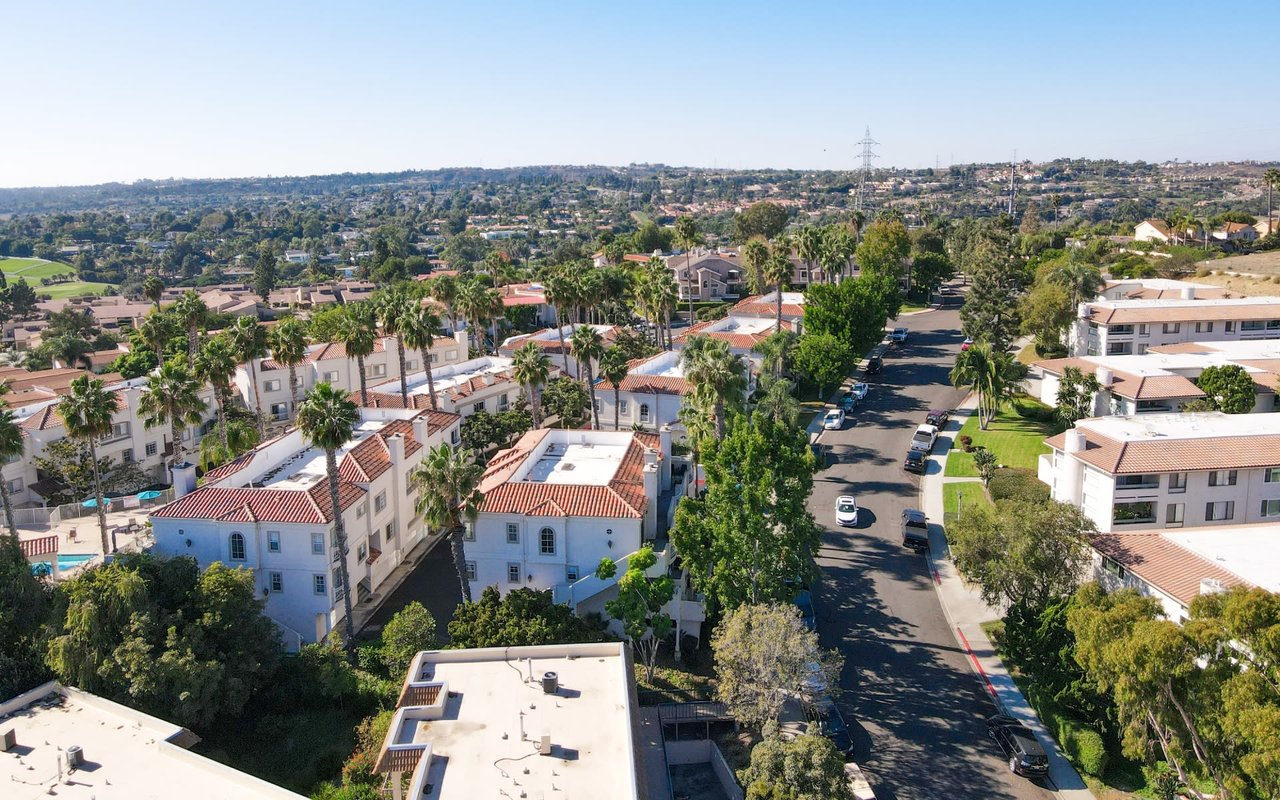
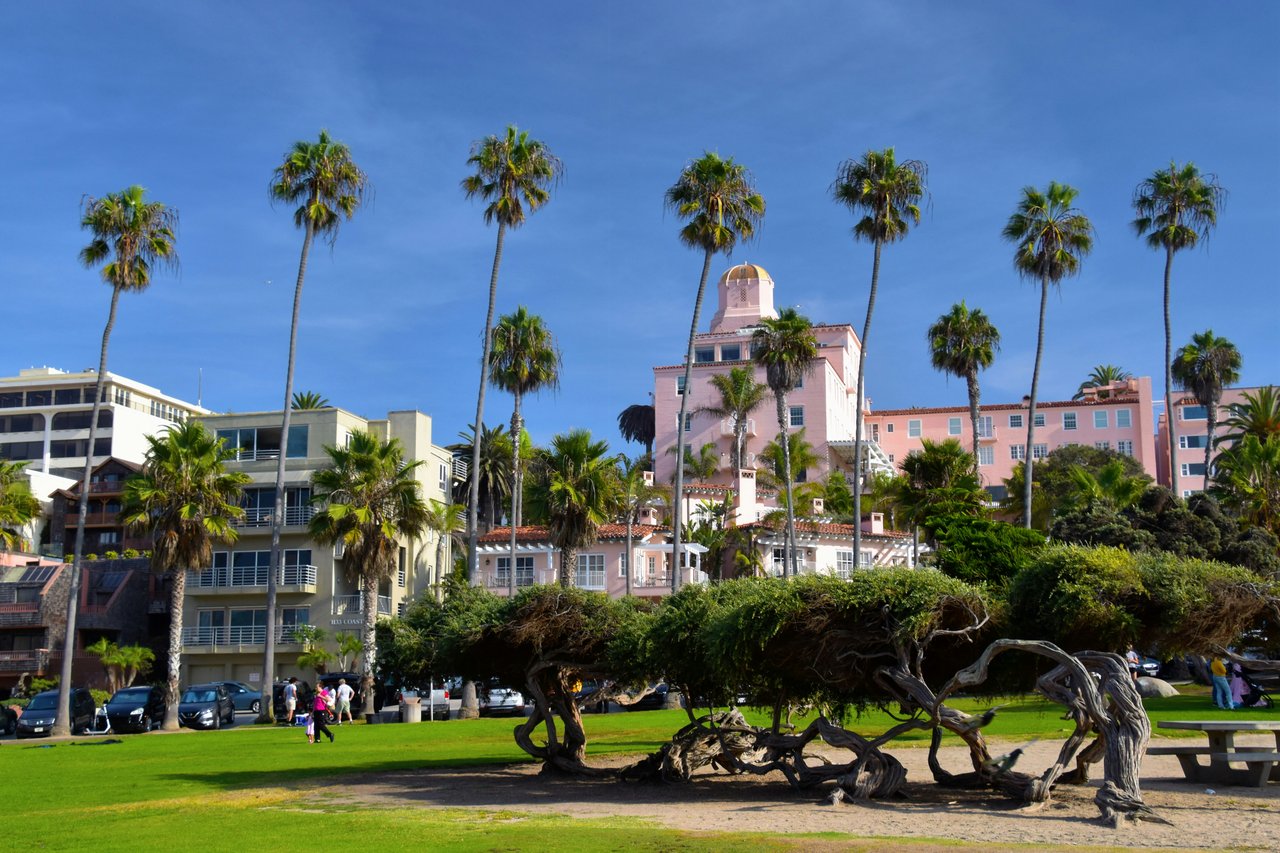
Locally, the Village means the walkable core around Girard Avenue and Prospect Street, the part of La Jolla with gallery storefronts, restaurant rows, and the Museum of Contemporary Art San Diego a short walk from the water. Condos there typically trade in a range of roughly $1.8 million to $6 million depending on proximity to the commercial strip and any ocean glimpse.
But a national portal grouping listings under the label "La Jolla Village" pulled in a much wider, cheaper geography. In a January 2026 snapshot, that broader label showed 33 homes for sale with a median price of $850,000, a 49-day average market time, and a 99 percent sale-to-list ratio, labeled a buyer's market. That is a completely different price tier and a completely different buyer profile than the walkable historic core people mean when they say "I want to live in the Village."
If you are pulling comps yourself, or reading a market report someone else pulled, the boundary definition matters as much as the number. Two people can quote a "Village median" and both be technically right, while describing housing stock that does not overlap at all.
Detached homes and condos are running two different negotiations
The other split worth knowing before you write an offer or set a list price: houses and condos in La Jolla are not experiencing the same market right now, even within the same submarket.
In a March 2026 snapshot, detached homes carried around 3.8 months of inventory and were selling at roughly 95.3 percent of list price, meaning most buyers had room to negotiate below asking. Condos were tighter, at about 3.3 months of supply with a 97.8 percent sale-to-list ratio, leaving less room to negotiate. That gap of nearly three points in sale-to-list ratio is the difference between a buyer who gets a real conversation about price and one who is still competing, and the citywide cooling Altos is tracking this month suggests the detached side of that gap has only widened since.
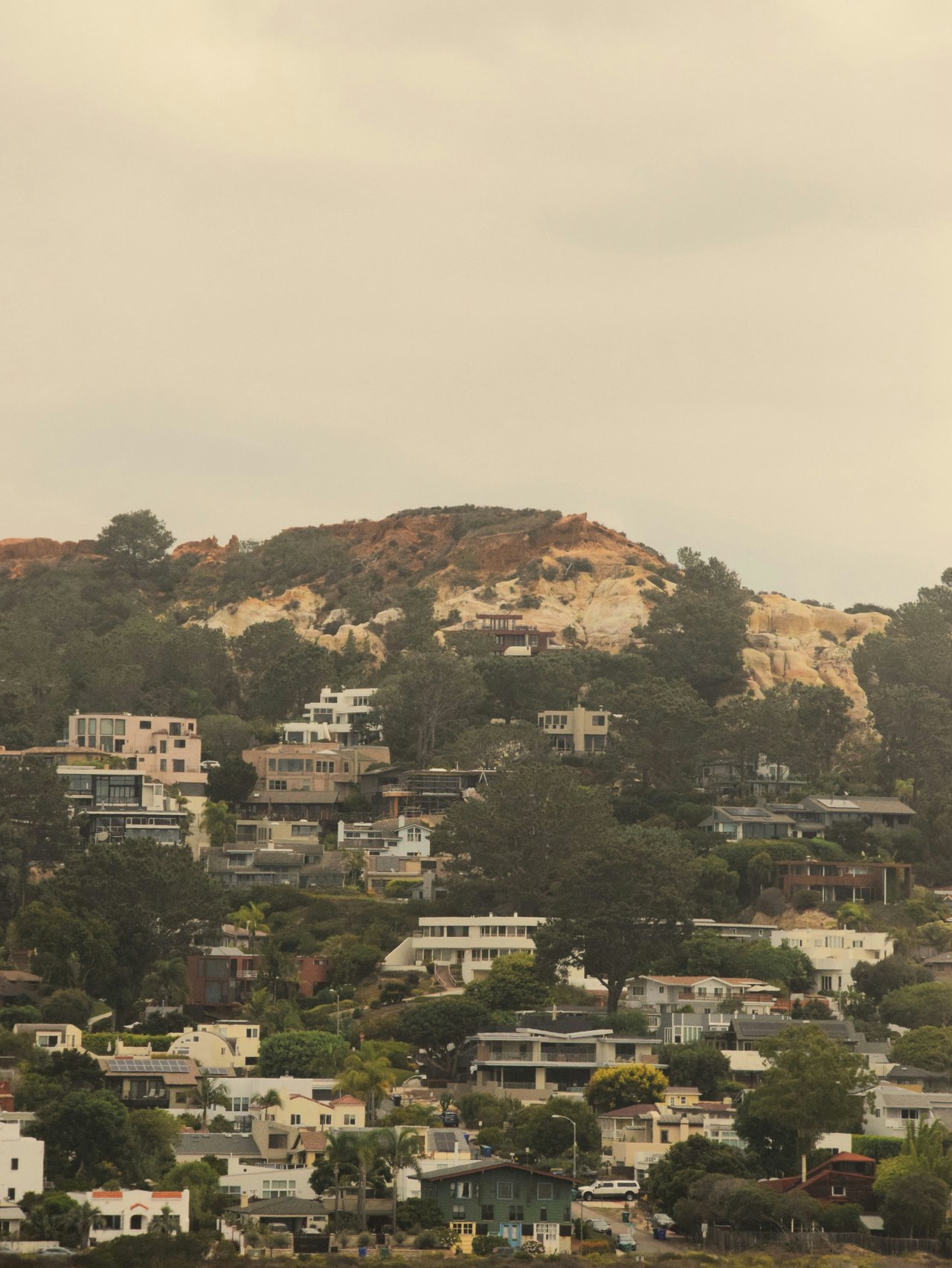
It also tracks with where each product type concentrates. Houses cluster in Muirlands, La Jolla Farms, and the hillside streets above the Shores, areas where a year-to-date figure through February 2026 put the single-family median near $3.545 million against a 92037-wide condo median closer to $1.22 million for the same period. Condos concentrate in the Village core and the smaller buildings scattered through Bird Rock. If you are shopping both product types at once, you are effectively running two separate negotiations, not one search.
What the submarkets actually looked like in 2026
| Submarket | Active listings | Median price | Days on market | Sale-to-list ratio | Snapshot dated |
|---|---|---|---|---|---|
| La Jolla Shores | 22 | $3.295M | 83 | 97% | Jan 2026 |
| Beach Barber / Windansea | 27 | $3.298M | 53 | 95% | Feb 2026 |
| Bird Rock | 13 | $2.60M (list) | 44 | — | Spring 2026 |
| Portal-labeled "La Jolla Village" | 33 | $850K | 49 | 99% | Jan 2026 |
| Citywide | 94 | $4.68M (list) | — | — | Sep 2026 |
These snapshots were taken at different points across the year, not the same week, so read them as evidence of structural variance rather than a single moment in time. That variance is the point: even a market this small produces headline numbers that move for reasons that have nothing to do with whether prices are actually rising or falling.
What this means before you write an offer or set a price
Pull comps from the specific pocket, not the zip code. A house in Muirlands has almost nothing in common, price-wise, with a condo three blocks from the Cove, even though both show up under "La Jolla" in a national search.
Check how the platform you're using defines its boundaries before you trust its median. If a listing site's "Village" pull area includes streets a mile from Girard and Prospect, its number will look nothing like what a local buyer means by the same word.
Ask what the current months of supply looks like for your exact property type, not the neighborhood in general. A house and a condo two doors apart can sit on opposite sides of a buyer's market and a seller's market at the same time.
And treat any single-month median with some skepticism when the pocket you're watching has fewer than 30 listings. One closing at either end of the price range can make the whole market look like it moved when it didn't.
A few questions worth asking directly
If La Jolla's median jumped from $2.3 million to $4.68 million between June and September, did prices actually double? No. The $2.3 million figure was a median sale price across closed transactions in the second quarter. The $4.68 million figure is a current list price snapshot, which tends to run higher and reflects whatever mix of homes happens to be actively listed that week, not what is actually closing.
Is La Jolla a buyer's market or a seller's market right now? It depends which La Jolla and which product type you mean. As of this month, citywide list-price data from Altos Research has been sitting in buyer's-market territory with prices continuing to soften. Earlier in the year, detached homes were already selling under asking while condos held tighter with less room to negotiate. Both signals point the same direction for houses. The honest answer still requires naming the submarket and the property type before you commit to it.
How many homes are actually for sale in the pocket I want? Often far fewer than the citywide count suggests. Several of La Jolla's named submarkets carried inventory in the teens to low thirties earlier this year. Before you anchor on a median, ask how many homes generated that number and when the count was taken.
None of this is a reason to avoid La Jolla. It is a reason to stop treating one number as the whole story. The neighborhoods that make up 92037 behave differently enough that the right comparison set matters more than the headline.
If you are trying to figure out which of these submarkets actually fits how you want to live, and what your money buys there this month, Ryan & Tracie can walk you through the pocket-level numbers before you write an offer. Schedule a private La Jolla consultation and we'll pull the comps that actually apply to your search.